
 Testosterone acts through androgen receptors located in the nucleus, cytoplasm, and mitochondria. It can be converted locally into dihydrotestosterone (DHT) or estradiol, depending on tissue needs, allowing it to regulate gene expression, protein synthesis, and rapid signaling cascades.
In the nervous system, testosterone enhances neural growth, dendritic spine density, and neuroplasticity. It increases dopamine activity in motivation circuits and the limbic system, supports memory and spatial cognition through hippocampal androgen receptors, and helps modulate stress reactivity by balancing cortisol and serotonin systems. For musculoskeletal health, testosterone stimulates protein synthesis via mTOR and IGF-1 activation, increases muscle fiber size and strength, especially type II fibers, and inhibits myostatin to promote muscle hypertrophy. It also stimulates osteoblast differentiation and bone mineralization, supporting skeletal strength and density. In the cardiovascular system, testosterone enhances nitric oxide synthesis for vasodilation, improves cardiac output and mitochondrial efficiency in heart muscle cells, supports endothelial repair, and reduces vascular inflammation when levels are balanced. Low testosterone, by contrast, is linked to metabolic syndrome and increased risk of atherosclerosis. Testosterone acts as an immune modulator with generally anti-inflammatory effects. It reduces pro-inflammatory cytokines such as IL-6, TNF-alpha, and IL-1β, maintains thymic function, and modulates macrophage polarization. For metabolic and endocrine regulation, testosterone improves insulin sensitivity and glucose metabolism, promotes lean mass over fat accumulation, reduces visceral adiposity, and regulates lipid metabolism and hepatic lipase activity. It also influences thyroid hormone conversion from T4 to T3 and helps maintain cortisol balance. At the cellular level, testosterone stimulates mitochondrial biogenesis and ATP production, increases oxidative phosphorylation capacity, and reduces reactive oxygen species. It supports NAD levels and enhances sirtuin signaling for longevity while preventing apoptosis in muscle cells and neurons under stress. Testosterone benefits skin, hair, and connective tissue by increasing collagen synthesis and skin thickness, stimulating sebaceous gland activity, and promoting hair follicle growth via DHT (facial and body; however, in scalp can lead to shedding and loss). It aids wound healing and fibroblast proliferation. In reproductive and sexual function, testosterone drives libido and erectile function through nitric oxide and dopaminergic pathways, regulates spermatogenesis and Sertoli cell activity, and maintains prostate health when estrogen balance is normal. Finally, testosterone supports cellular repair and longevity by promoting DNA repair enzymes and antioxidant defenses, regulating autophagy and mitochondrial turnover, and maintaining telomere integrity for cellular resilience. In summary, testosterone acts as a regenerative, anabolic, and neuroprotective hormone that optimizes cellular energy, structure, and function across nearly all systems.
0 Comments
 Estradiol is more than a hormone; it’s a master regulator of vitality, resilience, and cellular health. It works through estrogen receptors ER alpha and beta found in the nucleus, membrane, and cytoplasm. These receptors regulate gene transcription and activate rapid signaling cascades, influencing growth factors, metabolic pathways, and anti-inflammatory responses.
In the nervous system, estradiol increases synaptic density and dendritic branching, enhances neuroplasticity by upregulating brain-derived neurotrophic factor (BDNF), and boosts serotonin and dopamine signaling to improve mood and cognition while reducing neuroinflammation. It also helps regulate body temperature and circadian rhythm. In the cardiovascular system, estradiol promotes nitric oxide production for vasodilation, improves mitochondrial efficiency and antioxidant capacity, decreases LDL oxidation, increases HDL formation, and supports vascular repair by reducing adhesion molecules. For musculoskeletal health, it stimulates IGF-1 to enhance muscle repair and strength, inhibits myostatin to preserve muscle mass, and promotes bone formation and collagen integrity. Estradiol also strengthens immune function by enhancing antibody and T-regulatory responses, reducing inflammatory markers like IL-1β, TNF-α, and IL-6, stabilizing mast cells, and supporting mucosal immunity. Beyond these systems, estradiol supports skin and connective tissue by increasing collagen and elastin synthesis, boosting fibroblast activity, improving hydration, and aiding wound healing and DNA repair. It enhances mitochondrial energy by stimulating biogenesis through GC-1α, increasing ATP generation, strengthening antioxidant defenses, and reducing oxidative stress and apoptosis. For endocrine and metabolic regulation, estradiol improves insulin sensitivity and glucose uptake, regulates fat distribution and leptin signaling, and modulates thyroid receptor expression and cortisol feedback. In the vaginal and bladder mucosa, it thickens epithelial layers, supports lactobacilli growth, improves mucosal immunity and blood flow, enhances bladder tone, and helps prevent infection. Estradiol also promotes cellular longevity by activating telomerase, delaying senescence, inducing autophagy, and repairing DNA while reducing fibrosis through TGF-beta regulation. It even influences the gut microbiome by supporting microbial diversity and maintaining a healthy balance of species that aid digestion, immunity, and hormone metabolism. In summary, estradiol maintains cellular communication, mitochondrial vitality, and systemic resilience across nearly every organ system, underscoring its critical role in health and aging. One of my favorite tests in assessing hormone status, is the DUTCH (Dried Urine Test for Comprehensive Hormones) test used for comprehensive hormone testing. Production of our hormones occurs from an elaborate process via cholesterol and enzyme conversions. Ultimately, hormones are detoxified and then need to be excreted via stool, urine and sweat. This pathway is vital in hormonal health. Let’s break this pathway down. See figure 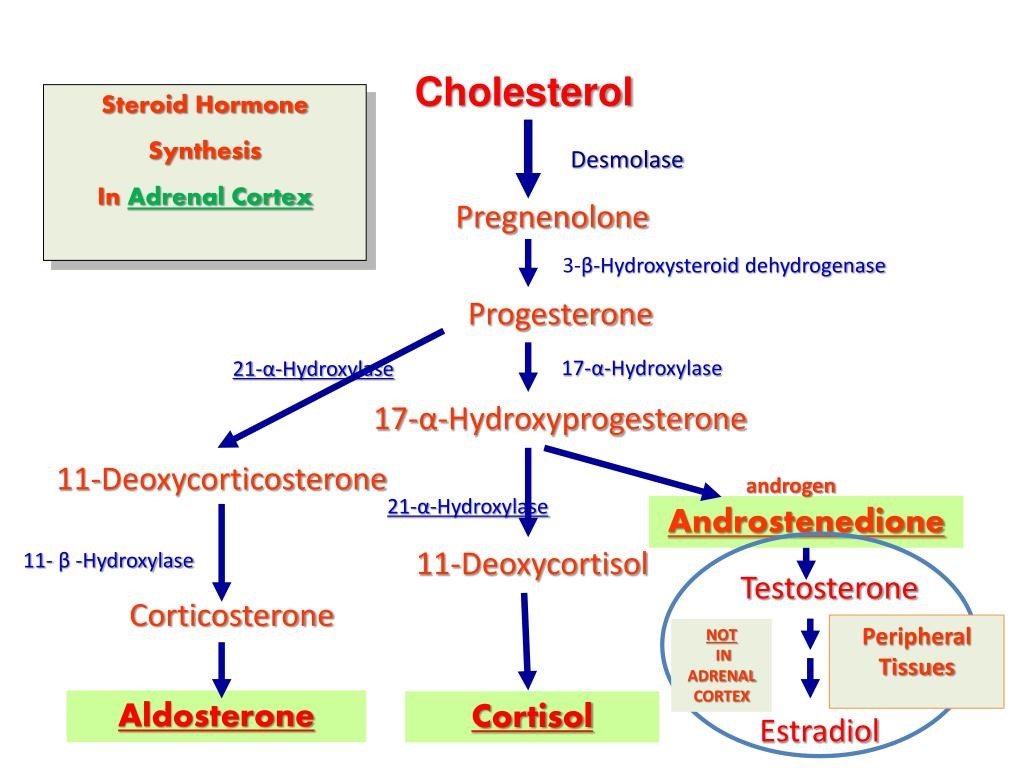 Cholesterol can get a bad rap without deserving it, but thanks to “Big Pharma,” it has been vilified specifically the LDL-c (low dense lipoprotein-cholesterol). Hormone replacement therapy has been looped into the “bad” category as well and is also misunderstood. Let’s take a look at how cholesterol (LDL-c) converts to hormones. Within the liver, cholesterol will begin its part of the metabolism process to become hormones via enzymes breaking it from one hormone into another one. Enzymes are necessary as well as co-factors to start the process of this steroid-hormone pathway. It is a downstream process. As the diagram reflects, cholesterol’s first hormone conversion is pregnenolone (a hormone naturally produced in the body by the adrenal gland). On one side of that conversion, progesterone is made. Progesterone (a hormone released by the corpus luteum in the ovary) has enzymes that cleaves (adheres to or sticks to) it into metabolites which can then be detoxified and will then enter the bowels, bladder and sweat glands for excretion. The same process occurs for our androgens, testosterone, cortisol, and estrogens, and also neurotransmitters, caffeine, alcohol, etc. The DUTCH test will reflect how your body does this breakdown. When you lack an enzyme and/or cofactors (i.e., folate, B12, zinc, etc.), the hormone pathway can be shunted in another direction and create a burden elsewhere. And remember, there are many endocrine disruptors in our environment that enter these pathways to be metabolized and compete at hormone receptor sites and/or create a huge toxic burden within this pathway. Ultimately, these hormones become metabolites. Also, 2-hydroxy (2-OH-E1) is considered the protective pathway, while 4-OH-E1 and 16-OH-E1 are oxidative in nature and cause DNA damage. Think of the rusting process that could occur on a car-that’s oxidation. When I review your DUTCH test, we will make a treatment plan on how to help your detoxification pathway to better excrete toxic metabolites. Remember that your bowel habits, water intake and exercise inducing sweating, help these toxins leave the body and why they are pivotal to hormone health. When prescribing bio-identical hormone therapy (BHT), it is essential to have this testing done on a regular basis along with other laboratory testing.  Hormonal declines are inevitable and when it arrives at our doors, the symptoms can be mild to a staggering feeling of exhaustion, depression, and not belonging to one’s own skin any longer. Symptoms include weight gain, mood changes, hot flashes, insomnia, joint pain, no sex drive, brain fog, and low energy. The neurohormonal shifts begin a decline in bone loss (osteopenia/osteoporosis), cholesterol changes atherosclerosis (hardening of the arteries caused by buildup of plaque), cognitive decline (Alzheimer’s), collagen loss (skin elasticity, wrinkles), vaginal atrophy (painful sex), and cortisol/stress hormone fluctuations (weight gain especially around the waist).
Bioidentical Hormone Replacement Therapy (BHRT), which is FDA-approved (except when compounded — a custom formulation of medication to fit a unique need of a patient), has been shown in research to reduce rates of heart disease, osteoporosis, Alzheimer’s, and vaginal atrophy. On the other hand, risks may include blood clots, stroke, and Myocardial Infarction (heart attack). However, because there is no long-term data with bioidentical hormones, the risks are not known. The studies for these side effects come from Premarin® and Provera® (conjugated estrogens) which are not bioidentical and taken in oral form. When I prescribe BHRT, I have them compounded and have them in patch, trouche (lozenges that dissolve slowing in the mouth), suppository or liquid form; they do not pass through the liver on its first phase of metabolism and where oral estrogen pass through the liver which is the reason the rate of blood clots increases. The oral birth control pill has the same risk due to the first pass in the liver. When patients initially establish care with me, labs and DUTCH test are necessary to assess their baseline hormonal status. The timing for starting BHRT is paramount to make sure bone density is established as well as warding off other disease processes. Once BHRT are prescribed, I require a yearly DUTCH test and labs. To remain as an established patient, the minimum visits will be two times per year. Most patients on average see me three times per year. Appointments can be conveniently held via telemedicine. |
Sherri AikinSherri Aikin is a Fellow of Integrative Medicine, Nurse Practitioner, Sex Counselor, Mindfulness Facilitator, and Life Coach. Categories
All
|
 RSS Feed